


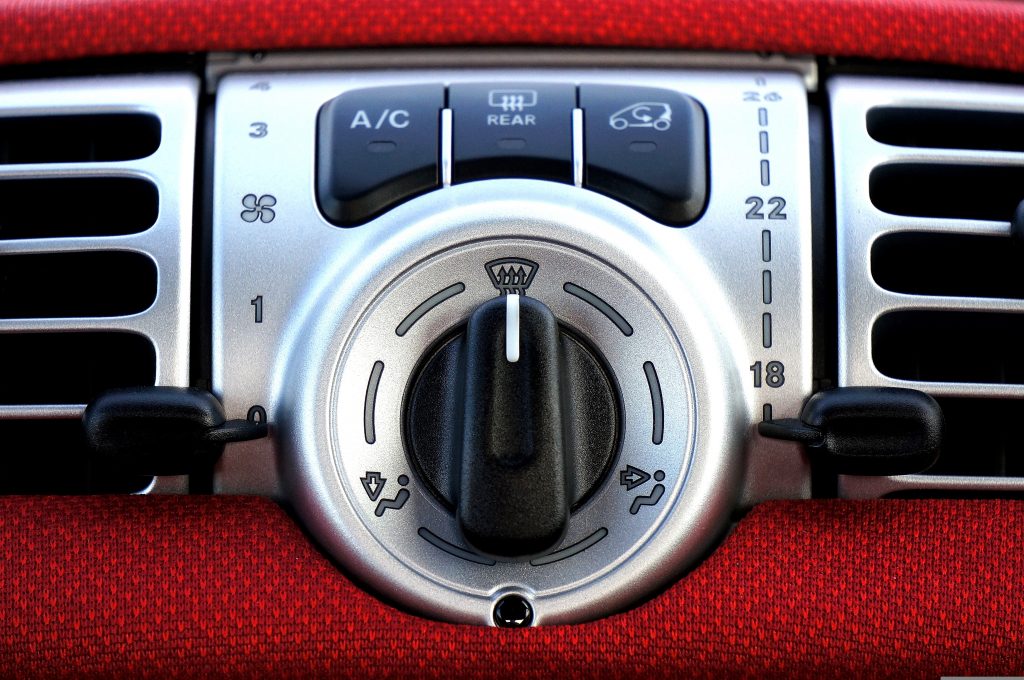
Canadian drivers treat air conditioning as a three-month luxury until a July highway trip or a fogged windshield in shoulder season. Then the system is either ice-cold or warm and noisy. What looks like a missing can of refrigerant is often a leaking condenser, a failed compressor, or a clutch that has already eaten the system from the inside.
Climate repairs sit in an awkward gap. They are not collision insurance. They are not an oil change. They are easy to postpone until parts and labour land in the high hundreds or low thousands—another example of rising repair costs on vehicles that are otherwise fine. This guide covers how the system works, a maintenance checklist that actually prevents compressor death, what an extended auto warranty in Canada may list on higher tiers, and how documented A/C work supports transferable warranty resale value.
What the System Has to Do in This Climate
Air conditioning is a sealed loop: compressor, condenser (the radiator-like core in front of the coolant radiator), expansion device, evaporator under the dash, and refrigerant with oil. The compressor is an engine-driven or electric pump. If refrigerant leaks out, oil leaves with it. A dry compressor then scores itself. That is why “just add gas” on a leaking car is how a $250 diagnosis becomes a $1,500 assembly.
Canada adds extra wear that warm-climate guides skip. Condensers live behind grilles that collect slush, salt, and pebbles. Winter idle means the system may sit unused for months, then is asked for maximum output on the first hot week. Defrost mode uses the A/C compressor on many vehicles to dry the windshield—so a dead system is a safety issue in spring rain, not only a comfort issue in July.
Hybrid and late-model vehicles may use electric compressors and extra sensors. Those parts are priced like electronics, not like an old R-12 pump from a wrecking yard.
Typical Repair Ranges
| Job | Typical cost (CAD) | What it usually means |
|---|---|---|
| Performance test, leak dye, and vacuum | $150–$350 | The step that should happen before any “recharge” |
| Refrigerant recharge after a confirmed small serviceable loss | $150–$400 | Not a fix if the leak is still open |
| Condenser, pressure switch, or line | $400–$1,200 | Stone damage and corrosion are common in winter cities |
| Evaporator (dash-out labour) | $1,000–$2,500+ | Labour dominates; smell plus weak cooling is a clue |
| Compressor and related parts | $900–$2,200+ | Often requires condenser, drier, and flush if the old pump ate itself |
| Blend door actuator or HVAC module | $250–$900 | Air is cold at the vent in one mode only, or clicks behind the dash |
A shop that quotes a recharge without a leak test is selling a temporary gauge reading. Ask for the test.
With Coverage vs. Without
| Scenario | No warranty | With a plan that lists A/C components (example $1,000 deductible) |
|---|---|---|
| Compressor replacement at $1,600 | Pay $1,600 | Listed compressor, clutch assembly, receiver-drier, evaporator per schedule |
| Recharge only, leak still open | Pay, then pay again | Refrigerant itself is often a consumable; the failed listed part is the claim |
| Selling in spring with “A/C needs gas” | Buyers discount hard | A working system plus remaining transferable term is easier to advertise |
A-Protect includes air-conditioning components such as the compressor, clutch assembly, receiver-drier, and evaporator on higher packages (for example certain Platinum Plus and Luxury-style tiers), not on every powertrain-only plan. Confirm the grid on the warranty packages page, then request a quote if summer comfort is part of why you keep the vehicle.
Symptoms That Need a Shop, Not a Can From the Parts Aisle
- Air that starts cool and turns warm after five minutes
- A squeal or grind when you press the A/C button
- Greasy film at hose joints or a bright stain from leak dye
- The clutch that never engages, or chatters in and out
- Musty cabin smell that returns after every rain—evaporator or drain issue
- Windows that will not clear on defrost when the A/C lamp is on
- A visible hole or folded fin pack in the condenser after a winter of highway stones
Stop using a screaming compressor. Running it “until I get to the dealer next month” spreads metal through the loop and can force a condenser and drier onto the same invoice.
A/C Maintenance Checklist
Once a month, including winter
- Run the air conditioning for 10 minutes. Circulation keeps seals wet and the clutch exercised.
- Use defrost with A/C in damp weather so you learn about a failure before a heat wave.
- Keep the area in front of the condenser clear of leaves, slush packs, and aftermarket covers that block airflow.
At every service visit
- Ask for a vent-temperature reading on a warm engine. Numbers beat “it feels fine.”
- Replace the cabin filter. A blocked filter makes a healthy system feel weak and strains the blower.
- Inspect the condenser for packed debris after winter.
- Note belt condition on engine-driven compressors. A glazed belt slips and overheats the clutch.
When repair is required
- Insist on leak detection before refrigerant is added.
- Replace the receiver-drier or accumulator when the loop has been opened. It is a moisture trap, not an optional extra.
- Flush or replace contaminated components if the compressor has failed internally.
- Use the refrigerant type on the under-hood sticker. The wrong chemical damages seals and is an environmental violation.
Keep the invoice with the refrigerant type and the parts list. Claims and the next buyer both want that page.
How to Protect Yourself From Rising Repair Costs
- Run the system year-round so seals do not dry and you catch faults early.
- Never treat a recharge as a repair without a leak test.
- Shut the system off if the compressor knocks or the belt screams.
- Read whether A/C is on your extended-warranty tier before summer.
- Budget cabin filters and condensers as owner items even when the compressor is listed.
- Ask about transfer if you might sell after the next winter rather than the next decade.
Need help matching a compact SUV or luxury sedan to a package that actually names the compressor? Contact A-Protect Warranty with the year, make, model, and whether the A/C already blows warm.
What Is Usually Listed vs. What You Still Pay
When air conditioning is included, contracts commonly speak to the compressor, clutch assembly, receiver-drier, and evaporator. Refrigerant, belts, hoses as wear items, and “needs a recharge” without a failed listed part are often owner costs. Blend doors and infotainment-controlled HVAC modules may sit on broader electrical or high-tech language instead of the A/C paragraph. Read both sections.
Pre-existing low performance is the enrollment problem. If the air is already warm, fix or disclose before you apply. Plans are written for breakdowns that occur after the contract starts.
Resale: “A/C Not Working” Is a Discount Code
Used-car ads that admit warm air invite a negotiation larger than a recharge. Buyers assume a compressor. A recent leak repair with a warranty-backed compressor and a remaining transferable term is a different sentence. Comfort systems are easy for shoppers to test in the lot. Do not give them a reason to open with a low offer.
A Seasonal Scenario
A six-year-old crossover sits all winter. In June the owner adds an off-the-shelf refrigerant can because the air is lukewarm. Two weeks later the compressor locks and the belt shreds. The shop finds dye from a condenser pinhole and metal in the drier. The invoice includes compressor, condenser, drier, flush, and labour—well above $2,000.
A $200 leak test in May and a condenser in isolation would have been the inexpensive plot. A contract that listed the compressor would have been the backstop if the pump still failed after a proper repair. Cans from the shelf skipped both controls.
Frequently Asked Questions
Why does my A/C work on the highway but not in traffic?
Airflow through the condenser is weaker at idle. A dirty condenser, weak fan, or low refrigerant shows up first in queues. It is still a fault, not “normal in Canada.”
Does an extended auto warranty in Canada cover air conditioning?
On many powertrain-only plans, no. On broader tiers, listed A/C parts such as the compressor, clutch, receiver-drier, and evaporator may be included. Check the package grid.
Is refrigerant covered?
Refrigerant is often treated as a consumable except when it is required to complete a covered component repair. Policies differ; read yours.
Can I recharge it myself?
You can mask a leak and overcharge a system that then damages the compressor. A proper vacuum, weigh-in, and leak test are the professional sequence.
Why do shops replace the drier with the compressor?
The drier absorbs moisture. Once the loop is open—or the old compressor has sent debris downstream—the drier is spent. Reusing it is how the new compressor fails early.
Will a working A/C help me sell the car?
Yes. It is one of the first buttons a buyer presses. Records plus transferable coverage help more than a verbal “it just needs gas.”
The Bottom Line
Air conditioning is a sealed mechanical system that winters try to puncture and summers try to overload. Run it monthly, test leaks before adding refrigerant, and stop a noisy compressor before it contaminates the loop. If factory coverage is gone, choose a plan that actually names the parts that cost four figures.
Compare A-Protect warranty packages, request a quote, or contact the team before the first heat wave writes the estimate for you.