


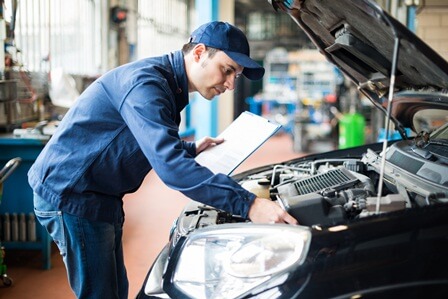
Advanced driver-assistance systems are now standard on most new vehicles sold in Canada. Forward cameras, radar units, parking sensors, and blind-spot monitors improve safety, but they also change the economics of ordinary repairs. A windshield replacement, bumper cover, or even an alignment can require professional calibration. Skip it or do it incorrectly and the systems may not work—or may set faults that demand further diagnosis.
These jobs have become a visible part of rising repair costs. What used to be a straightforward glass or body repair now includes specialized equipment, OEM parts, and labour that can add hundreds or thousands of dollars. Once the factory warranty ends, the owner pays. This guide explains when calibration is required, typical Canadian cost ranges, maintenance and repair habits that reduce risk, and how an extended auto warranty in Canada may cover listed sensors and modules—while also supporting transferable warranty resale value.
What Triggers ADAS Calibration
Cameras and radar must be aimed precisely. Any work that moves their mounting points or changes the vehicle’s geometry usually requires calibration:
- Windshield replacement (most forward-facing cameras sit behind the glass)
- Bumper cover removal or replacement (radar and parking sensors)
- Front or rear collision repairs, even minor ones
- Suspension or alignment work that alters ride height or thrust angle
- Replacement of a camera, radar, or related control module
Static calibration uses targets in a controlled bay. Dynamic calibration requires a road drive under specific conditions. Many vehicles need both. The process is not optional if the system is to function as designed and pass safety inspections or insurance requirements.
Typical ADAS-Related Costs in Canada
| Service or part | Typical range (CAD) | Notes |
|---|---|---|
| Forward camera calibration (static or dynamic) | $300–$600 | Often required after windshield replacement |
| Front radar calibration | $300–$500 | Common after bumper work |
| Surround-view or multiple camera calibration | $400–$800+ | Higher on luxury and some SUVs |
| Parking sensor replacement + calibration | $400–$1,000 | Sensors are fragile; calibration follows replacement |
| Forward camera or radar unit replacement | $800–$2,500+ | OEM modules plus programming and calibration |
| Full ADAS diagnosis after a fault | $150–$400 | Before parts are authorized |
A windshield that once cost a few hundred dollars can now exceed $1,000–$1,500 once camera calibration and any related sensor work are included. Minor bumper repairs frequently add similar amounts. These are not covered by most collision policies when the work is purely mechanical or calibration-related after the factory warranty.
With Coverage vs. Without
| Scenario | No extended warranty | With broader coverage listing sensors/modules (example $1,000 deductible) |
|---|---|---|
| Camera replacement + calibration at $1,800 | Pay $1,800 | Listed camera or module may be covered; calibration labour often follows |
| Radar unit failure at $1,400 | Pay $1,400 | Eligible if the component is on the schedule |
| Calibration only after glass work | Usually owner-paid | May be included only when required to complete a covered repair |
| Selling a late-model vehicle | Buyer worries about sensor faults | Remaining transferable coverage reduces that concern |
Powertrain-only plans rarely include ADAS hardware. Higher tiers that list sensors, cameras, control modules, and related electronics are the relevant choice. Review options on the warranty packages page and request a quote for your specific vehicle.
Signs Your ADAS Needs Attention
- Warning lights or messages for lane-keeping, adaptive cruise, or automatic emergency braking
- Systems that disable themselves after a windshield or bumper repair
- False alerts or systems that fail to detect vehicles or lane markings
- Parking sensors that beep constantly or not at all
- Recent glass, body, or alignment work without documented calibration
Do not ignore these. An uncalibrated system may not perform as expected in an emergency, and continued driving with faults can sometimes lead to additional diagnostic costs.
Maintenance and Repair Checklist for ADAS-Equipped Vehicles
Before and after glass or body work
- Confirm the shop is equipped and certified for your vehicle’s calibration requirements.
- Ask for written confirmation that calibration was completed and any fault codes were cleared.
- Test the systems on a safe road after the work (lane-keeping, adaptive cruise if equipped).
Routine care
- Keep the windshield and camera area clean; dirt and ice reduce performance and can set faults.
- Clear snow and slush from grille-mounted radar and bumper sensors.
- Replace wiper blades regularly so the camera view stays clear.
- Address windshield chips promptly; a crack that spreads often forces full replacement plus calibration.
At service visits
- Mention any recent glass, bumper, or alignment work so the technician can verify calibration status.
- Request a scan for stored ADAS-related codes.
- Keep invoices that document calibration; they help with future claims and resale.
How to Protect Yourself From Rising Repair Costs
- Choose qualified shops for windshield and bumper work and insist on calibration documentation.
- Keep cameras and sensors clean and free of ice or debris.
- Repair chips early to avoid full windshield replacement.
- Select extended coverage that lists sensors, cameras, and modules if you drive a late-model vehicle past the factory warranty.
- Understand that pure calibration after non-covered glass work is often owner-paid, while replacement of a failed listed sensor may be eligible.
- Confirm transfer rules for future resale.
Need help determining whether your vehicle’s ADAS components are covered? Contact A-Protect Warranty.
Coverage Realities
Extended warranties focus on mechanical and electrical breakdowns of listed parts. Calibration required solely because of a windshield or bumper repair (without a failed covered component) is frequently treated as part of that repair and owner-paid. Replacement of a failed camera, radar, or related module, plus the calibration needed to complete the job, is more likely to be covered on broader plans. Pre-existing faults are excluded. Read the schedule carefully.
Resale Impact
Used-car buyers increasingly test or ask about driver-assistance features. A vehicle with documented recent calibration and remaining transferable coverage on listed sensors is easier to sell than one with active warning lights or an unknown calibration history. That remaining protection is a practical form of transferable warranty resale value.
A Common Scenario
A six-year-old SUV needs a windshield after a stone chip spreads. The glass shop quotes the glass plus $450 for camera calibration. Months later an adaptive-cruise fault appears. Diagnosis shows the radar needs replacement. Without coverage the owner pays for both the earlier calibration and the new radar-plus-calibration job. With a plan that lists the radar, the second repair is limited to the deductible (subject to authorization and records).
Frequently Asked Questions
Is ADAS calibration required after every windshield replacement?
On most vehicles with a forward-facing camera, yes. The camera must be recalibrated to the new glass. Skipping it can disable safety systems or set persistent faults.
Does an extended auto warranty in Canada cover ADAS calibration?
Calibration is often covered only when it is required to complete a repair of a listed component. Stand-alone calibration after glass or body work is usually owner-paid. Confirm your plan’s language.
Are cameras and radar units covered?
On broader packages that list sensors and control modules, yes in many cases. Powertrain-only plans typically exclude them. Check the component schedule.
Can I calibrate ADAS myself?
No. Proper calibration requires manufacturer-specific targets, software, and procedures. Incorrect calibration can leave systems unsafe or inoperative.
Does a minor parking-lot bumper tap require calibration?
Often yes if sensors or their mounting points were disturbed. A scan and visual inspection by a qualified shop will confirm.
Will transferable coverage help when selling a vehicle with ADAS?
Yes. Buyers value remaining protection on expensive sensors and modules, especially when calibration records are also available.
The Bottom Line
ADAS technology improves safety but raises the cost and complexity of glass, bumper, and sensor repairs. Once the factory warranty ends, those costs fall on the owner unless a broader extended plan lists the relevant components. Proper shop selection, documentation, and basic care of cameras and sensors reduce problems. Coverage provides a backstop for the failures that still occur.
If you drive a late-model vehicle, compare packages that address electronics and sensors. Request a quote from A-Protect Warranty or contact the team before the next windshield or bumper repair arrives with an unexpected calibration line.